
When you talk about the architects of the modern R&B sound, one name consistently rises to the top of the list. He has been described by fans and critics alike as the “caviar of R&B,” a virtuoso whose pen has shaped the careers of the world’s biggest superstars. From Rihanna and Beyoncé to Justin Bieber, Drake, and Jay-Z, his influence is woven into the very fabric of 21st-century music.
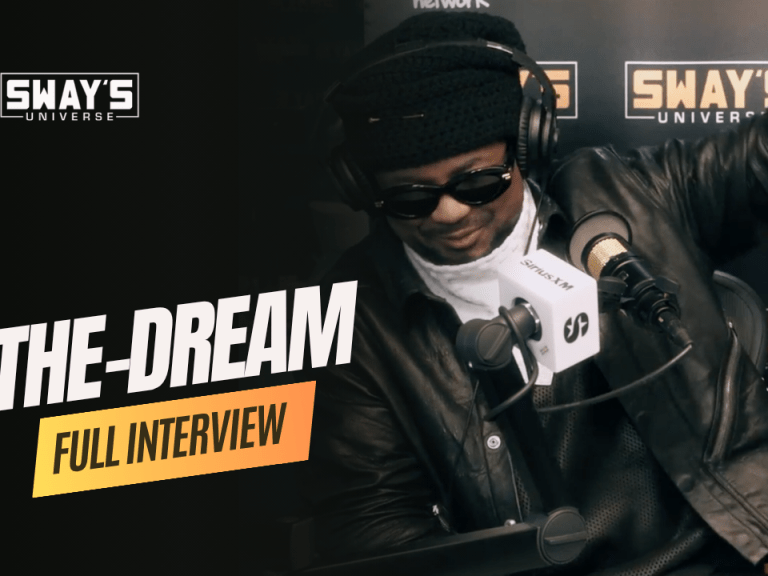
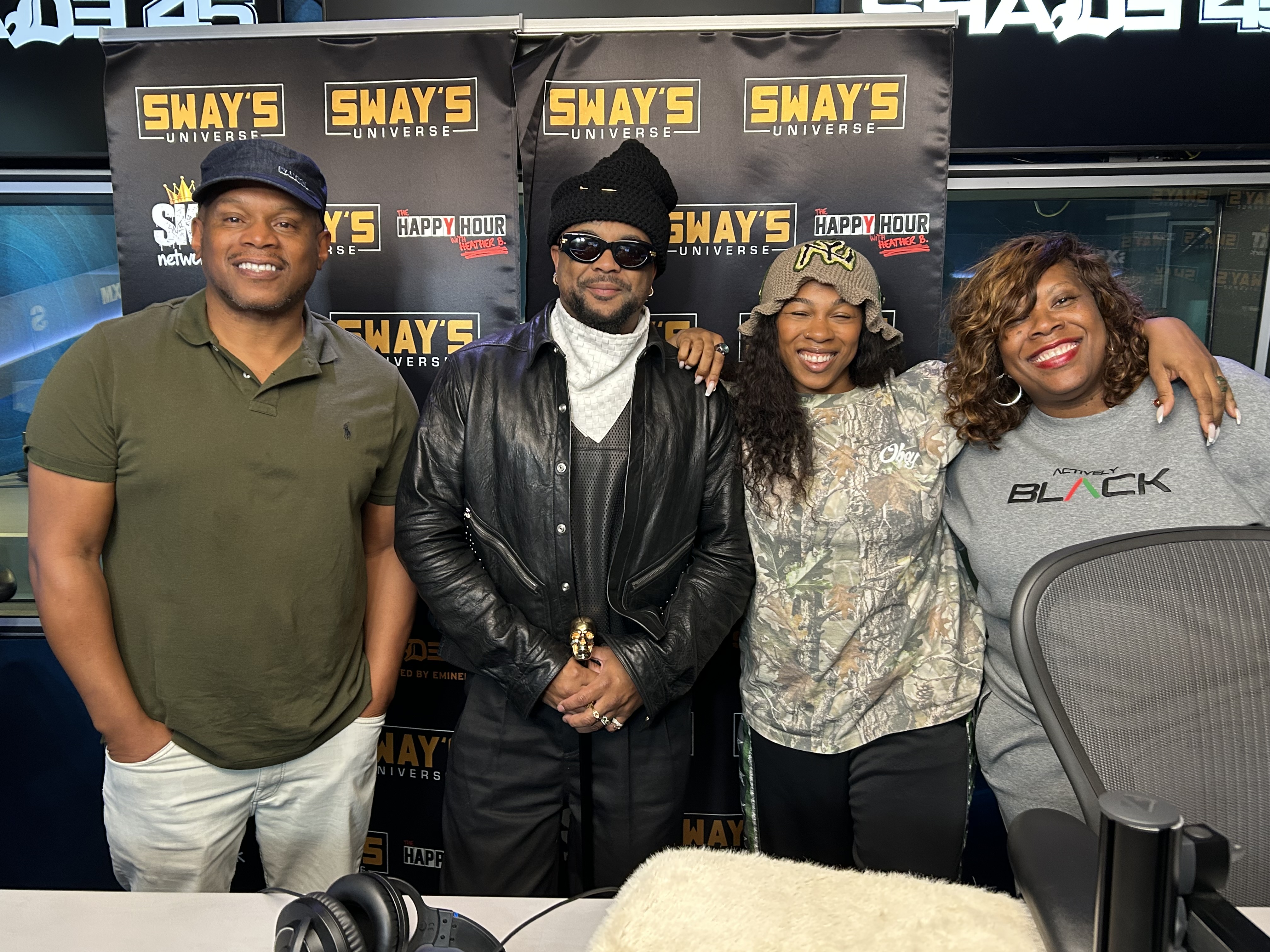
Recently, the legendary singer, songwriter, and producer known as The Dream sat down with Sway and the crew to reflect on his nearly 20-year career, the spiritual journey behind his music, and his highly anticipated upcoming project, Love Hate 2. It wasn’t just an interview; it was a masterclass in creativity, resilience, and the pure love of the craft.
A Legacy Built on Hits and Heart
The Dream’s impact on the industry is hard to overstate. While many know him for his solo classics like Love Hate (2007) and Love vs. Money (2009), his work behind the scenes is what cemented his status as an “irreplaceable” force. During the interview, Tracy from the Sway in the Morning team highlighted how vital his debut project was, calling it one of the most spectacular and vital projects of the last two decades.
Despite the mountain of hits and the “roster of names” he has worked with, The Dream remains grounded in the “why” behind his music. For him, the business was always secondary to the creation. “We didn’t do this for the business,” he explained. “You’re a creator because that’s what’s in your heart. That’s what’s in your blood.”
The Atlanta Roots: Church, Bands, and the Dungeon Family
To understand the genius of The Dream, you have to look at his upbringing in Atlanta during the late 1980s and early 90s. It was a magical time when music was everywhere, not as a commodity, but as a community experience. He reminisced about the days when the “business of music” wasn’t even on the radar for young artists in the city.
The Influence of Marching Bands
The Dream’s musical foundation was built on the discipline and soul of HBCU marching bands. He started playing the trumpet in the third grade and spent his childhood watching VCR tapes of Grambling, Jackson State, and Florida A&M’s Marching 100. This appreciation for “band music”, the layers, the power, and the precision, eventually bled into his production style.
The Church and the Dungeon Family
Like many R&B greats, the church played a massive role. In Atlanta, if you were in the building, you were in the choir, no audition necessary. This raw, communal musical environment coincided with the rise of the Dungeon Family, a creative collective that proved Atlanta had something unique to say to the world. For The Dream, these experiences taught him that music was something you did out of love first, with the hope that it might eventually pay the rent.
The Story of the Lost Piano: A First Heartbreak
One of the most poignant moments of the interview was when The Dream shared the story of his first musical heartbreak. It didn’t happen in a boardroom or at an awards show; it happened in his grandfather’s living room. His grandfather, a cement mason, had an old, out-of-tune piano that The Dream adored.
“I loved that piano,” he recalled. “I didn’t even understand what it would mean to get it tuned up… one day I came home and it was gone.” His grandfather had sold it, unaware of the deep emotional connection his grandson had to the instrument. Seeing his grandfather’s reaction to his tears, a moment where a “manly” exterior cracked in realization of a missed connection, was the moment The Dream knew exactly how much music meant to him.
The “Umbrella” Grammy Loss and the Power of Work Ethic
Even after finding massive success, the industry can still deliver blows. The Dream opened up about the time his heart was broken as a professional artist: the night “Umbrella” lost the Grammy for Song of the Year to Amy Winehouse’s “Rehab.”
While others told him he should just be happy to be nominated for the first time, The Dream had a different perspective. He knew the song had changed the landscape of music. Rather than wallowing at the Grammy after-parties, he took his frustration and channeled it back into his craft. “I drove to Vegas and went to the studio immediately,” he said. “I was like, ‘I don’t want to see nobody.’ I’ll go right back to work.”
This reveals a key insight into his success: the arrival is never the end goal. For The Dream, accolades are secondary to the work itself. He acknowledges that while he can’t control “God’s time” or when a blessing is meant to arrive, he can control his work ethic.
Spirituality and Intuition in the Music Industry
Navigating the music business requires more than just talent; it requires a strong internal compass. The Dream lost his mother at the age of 15, an event that forced him to become highly intuitive and distinctive about his feelings. Without a traditional “village” or parental safety net, he had to rely on his spiritual self to make decisions.
He admitted that even today, he tries to let his “feeling” guide who he works with. “You can catch me on a day where… I’ll go against my feeling because of how the world presents itself,” he confessed. “And then you do it and you’re like, ‘I knew I shouldn’t work with you!'”
For aspiring artists, this is a vital lesson: protect your energy. In an industry that constantly throws distractions and demands at you, maintaining your spiritual integrity is the only way to sustain a long-term career without losing yourself.
Looking Forward: Love Hate 2 and the Usher Collaboration
The Dream is currently gearing up for a new era with his forthcoming album, Love Hate 2. The project’s new single, “Tampa,” features the legendary Usher, a collaboration that feels like a full-circle moment for two R&B titans.
Speaking on Usher, The Dream noted that the singer is a “renaissance man” who could easily teach a course on how to be an artist. He observed that Usher’s success comes from a place of deep thought, sometimes even overthinking, because he cares so much about the artistry. Seeing these two creators come together promises a project that honors the history of R&B while pushing it into the future.
The Dream’s journey from a young boy crying over a lost piano in Atlanta to becoming the “caviar of R&B” is a testament to the power of authenticity. As he prepares to release Love Hate 2, he remains a vital figure in music because he refuses to compromise his creative spirit. Whether he is writing a global anthem for Rihanna or stepping into the booth himself, The Dream continues to prove that true artistry is irreplaceable.
Keep an ear out for “Tampa” and get ready for the next chapter of a legacy that is nearly two decades in the making. The Dream isn’t just back, he never really left.