
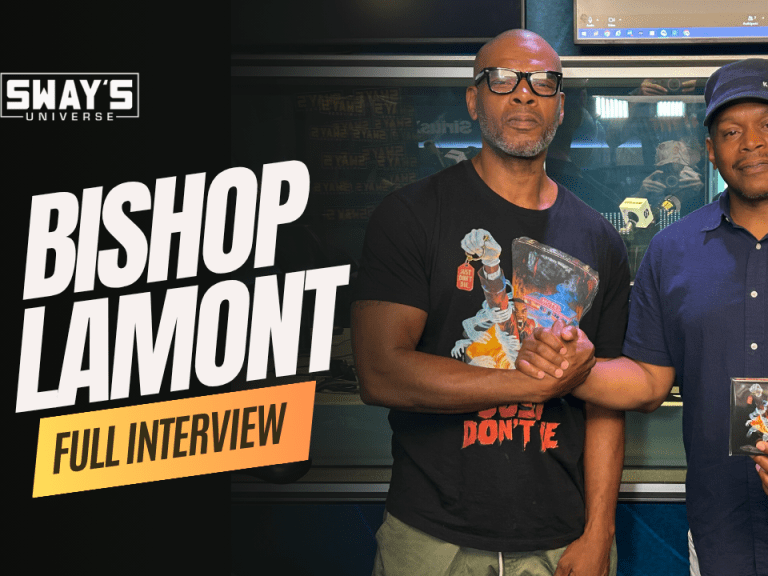
The Return of a West Coast Juggernaut: Bishop Lamont
The Los Angeles hip-hop scene has always been defined by its juggernauts—those artists who don’t just ride the wave but create the tide. Recently, the legendary Bishop Lamont sat down to discuss his journey, his new music, and the state of the culture. Known for his razor-sharp lyricism, political commentary, and unwavering community work, Bishop Lamont remains one of the most revered MCs in the game. From the Confessional Mixtape to the critically acclaimed The Layover, his trajectory has been marked by a refusal to follow the status quo.
In an industry that often demands conformity, Bishop has chosen a different path. It is a path of sacrifice and wisdom, proving that the only true movement is the one you carve for yourself. Today, he is back with a cinematic new project and a revolutionary approach to how music should be shared and consumed.
Independence and the Power of Your Own Movement
One of the most striking things about Bishop Lamont’s career is his independence. Standing up for what you believe in often comes with being ostracized by the mainstream, but as Bishop points out, that’s where the real power lies. When you stop trying to fit into someone else’s narrative, you realize that you don’t need their validation to win.
Bishop’s latest evolution involves a deep dive into the revindicated.com platform. This isn’t just a website; it’s a statement of ownership. In an era where artists are often at the mercy of major labels and streaming algorithms, Bishop is going direct-to-consumer. He’s not just making music; he’s building an ecosystem with his team, including his creative partner Blitz, who helps bring the visual and conceptual elements of the “mini-movie” experience to life.
Key Takeaway: The Direct-to-Consumer Revolution
- Ownership is King: By hosting music on revindicated.com and thebishlamontpro.com, the artist maintains control over their art and their data.
- Visual Storytelling: Modern hip-hop requires more than just bars; it requires a cinematic presentation that captures the audience’s imagination.
- Cutting Out the Middleman: Bypassing traditional systems allows for a more authentic connection between the creator and the fan.
“Sand Castles” and Building on Solid Principles
During the conversation, Bishop touched on the poignant themes of his song “Sand Castles,” featuring Soly Ghost. The metaphor is clear: if you build your life or your career on a false foundation, the waves of reality will eventually take it all away. In an industry built on smoke and mirrors, Bishop stands on the principles that made him love hip-hop in the first place.
“Sand castles, they too crumble,” he warns. He challenges listeners and fellow artists to “pick a side.” For Bishop, that side is community, spirit, and being the “light in the dark.” He compares his role to an Abraham Lincoln penny—while everyone else is looking in one direction, he’s the only one looking the other way. This commitment to truth, even when it’s unpopular, is what separates a true artist from a mere performer.
The Myth of Agism in Hip-Hop
A major point of discussion was the prevailing narrative of agism within hip-hop culture. While genres like rock and country celebrate their legends—think Mick Jagger, Bob Dylan, or Johnny Cash—hip-hop often tries to push its veterans out the door once they reach a certain age. Bishop argues that this is by design.
The industry wants artists “young and green” because they are easier to control and exploit. By the time an artist becomes wise enough to renegotiate their contracts or ask the right questions, the industry labels them “too old.” Bishop is vocal about dismantling this “hip-hop game” label. To him, this isn’t a game; it’s an art form and a business that grew from the “have-nots.”
“This is our art and this is our business,” Bishop asserts. He encourages artists who have stopped making music due to industry pressure to pick up the mic again. Your gift is divine, and it shouldn’t have an expiration date dictated by a boardroom executive.
The “Spot-a-lie” Critique and Redefining Success
Bishop doesn’t pull punches when it comes to modern streaming platforms. He humorously refers to the industry giant as “Spot-a-lie,” highlighting how the current system fails to fairly compensate or represent the true essence of the culture. He argues that we have started to equate success with views, streams, and charts, rather than the quality of the craft.
He points out the irony of the “internet generation” of hip-hop. In the early days, you had to pay your dues in ciphers and be “down” with a crew to earn respect. Now, anyone with an internet connection can claim a piece of the culture without ever stepping foot in their local community. Bishop’s focus remains on regional authenticity and the “blood, sweat, and tears” that go into real artistry.
What Real Success Looks Like:
- Artistic Integrity: Being “ill” like Cool Keith or Bahamadia is more valuable than outselling everyone with a gimmick.
- Community Connection: Representing a real location and a real people, not just a digital persona.
- Financial Independence: Owning your masters and your distribution channels.
Embracing the Future: AI as a Creative Tool
Perhaps most surprisingly for a veteran MC, Bishop Lamont is a vocal advocate for Artificial Intelligence (AI). Rather than fearing the technology, he views it as a powerful tool in his creative toolbox. He uses it to enhance his cinematic presentations, photography, and film work.
In the past, an artist needed a massive budget to hire directors like Hype Williams or Paul Hunter to get a high-quality video. Today, with AI and modern editing software, independent artists can produce world-class visuals from their own homes. Bishop’s message is clear: Don’t be afraid of the tools; use them to bypass the need for label loans. By mastering these technologies, artists can maintain their independence while competing at the highest visual level.
The Bat Signal is Up
Bishop Lamont’s return is more than just a new album release; it’s a call to action for the entire hip-hop community. His new project, “Just Don’t Die,” featuring icons like Chuck D, Ice-T, and MC Eiht, is a celebration of survival and excellence. It serves as a “bat signal” to all the artists who have been crushed by the business or told they are past their prime.
The message is simple: Keep going. Your inspiration is a gift that cannot be stopped by anyone but you. Whether it’s through embracing new technology, building your own platform, or standing firm on your principles, the path to true success is the one you build yourself. As Bishop Lamont proves, when you refuse to follow the status quo, the status quo eventually has to come to you.