
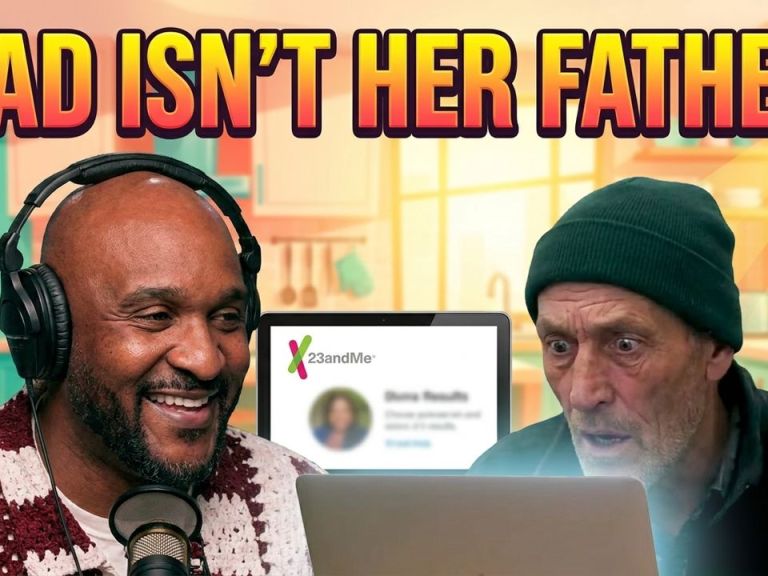
Imagine calling a lifelong friend on Mother’s Day, expecting to share a warm moment of celebration, only to be met with a heavy, painful silence. This is exactly what happened to Heather B during a recent segment on Sway in the Morning. Her friend, a woman in her 50s, had just uncovered a life-altering secret through a 23andMe DNA test: The man who raised her was not her biological father.
This revelation didn’t just change her family tree; it shattered her relationship with her mother. In an era where home DNA kits are as common as holiday gifts, “DNA surprises” are becoming a modern epidemic, forcing families to reckon with secrets that have been buried for decades. How do you handle the feeling of betrayal? When is the “right” time to tell a child the truth? And how can a family move toward healing when the foundation of their history has been shifted?
Joined by expert David Webber, the team delved deep into the complexities of family secrets, the psychology of grief, and the necessity of grace when the past comes knocking.
The Shock of the DNA Discovery
For Heather B’s friend, the discovery was accidental. She wasn’t looking for a scandal; she was simply trying to map out her family tree as she got older. But the results provided a match that didn’t align with her known history. Finding out that your biological father is someone else at age 50 is a unique kind of trauma. It isn’t just about a name on a birth certificate; it’s about five decades of holidays, conversations, and a sense of identity that suddenly feels like a lie.
The immediate reaction for many in this situation is anger. Heather B noted that her friend stopped speaking to her mother entirely. The central question burning in the daughter’s mind was: “Why didn’t you tell me? I deserved to know.”
The Concept of Dialectics: Two Truths Can Exist at Once
David Webber introduced a powerful psychological tool to help navigate this conflict: Dialectics. This is the idea that two seemingly opposing things can be true at the same time. In the case of a family secret like this, the dialectic looks like this:
- Truth A: The daughter was lied to for 50 years and has every right to feel betrayed and hurt.
- Truth B: The mother loved her daughter, protected her, and made the best decision she could with the maturity and resources she had at the time.
Webber emphasized that acknowledging one truth doesn’t negate the other. You can be angry about the secret while still acknowledging that your mother was a “good woman” who provided a stable, loving home. Understanding this balance is the first step toward reconciliation.
Understanding the “Why” Through the Lens of Grace
One of the hardest parts of processing a late-in-life discovery is empathizing with the parent who kept the secret. However, Webber suggests that we must look at our parents not just as “Mom” or “Dad,” but as young people who were once in over their heads.
“I think the older we get, we begin to understand our parents more,” Heather B noted. Back in the day, societal pressures were different. Many women were married and had multiple children by the age of 25. If a woman found herself in a complicated situation regarding paternity, her primary goal was often survival and stability for her child.
The “Right Time” Dilemma
When is the “right” time to tell a child their father isn’t their biological parent? Is it in kindergarten? At high school graduation? On their wedding day? As Webber pointed out, for a parent who has built a life on a specific narrative, there is never a “perfect” moment that doesn’t feel like it will blow up the family’s world. Often, parents keep the secret not out of malice, but out of a desperate desire to protect the child’s peace and the family unit.
Applying Grace to the Past
Webber challenged the listeners to consider their own lives: “Would they make that decision at 50? Maybe not. But at 25? Yeah, I probably would have made that same decision.” Giving a parent grace means acknowledging that they were doing the best they could with the wisdom they had at that age.
Navigating the Five Stages of DNA Grief
Finding out your biological history is a lie triggers a genuine grieving process. David Webber explained that this isn’t just a “family spat”, it is a loss of identity. He broke down how the five stages of grief apply to this situation:
- Denial: The initial shock. “The test must be wrong. There must be a mistake at the lab.”
- Anger: Lashing out at the parent. “How could you lie to me for my entire life?” This is where Heather B’s friend currently finds herself.
- Bargaining: Trying to find a way to make the old reality true again or looking for excuses to minimize the impact.
- Depression: The heavy sadness that comes with realizing the family dynamic has changed forever.
- Acceptance: Reaching a place where you can live with the new truth without it consuming your life.
Understanding that these feelings are part of a natural cycle can help those in the “anger” phase realize that their current emotions are a bridge, not a destination.
The Risks of Searching for “Biological Roots”
Heather B’s friend decided to pursue her biological father, but this journey is fraught with emotional landmines. When you reach out to a biological parent after 50 years of silence, you are making a “cold call” into someone else’s life.
Key considerations for those searching:
- Receptivity: The biological father may not know you exist, or he may have moved on and started a completely different family. He might not be open to contact.
- Disruption: Your arrival could blow up his current family life just as your life was blown up by the DNA test.
- The “Father” vs. “Biological Contributor” Distinction: Heather B made a profound point: “God chooses who will bring you forth… and God may also choose who raises you up.” The man who was there for the scraped knees, the graduations, and the heartbreaks is the father, regardless of genetics.
Adoption vs. Late Discovery: A Different Kind of “Hole”
The conversation took an interesting turn when a caller named Trey shared his perspective as an adoptee. Unlike Heather B’s friend, Trey knew he was adopted from a young age. While he didn’t feel “tricked” or “betrayed” by a lie, he still described a “hole” in his identity.
Trey’s experience highlights that the “why” is a universal human craving. Whether you were told the truth early or found out late, the question of “Why did my biological parent make this choice?” remains a powerful driver. However, the added layer of betrayal in late-discovery cases makes the reconciliation with the surviving parent much more difficult.
Key Takeaways for Healing Family Rifts
If you or someone you know is dealing with a major family secret or a DNA surprise, keep these insights from the discussion in mind:
- Practice Dialectics: Hold space for the fact that your parent lied AND they loved you. Both can be true.
- Focus on the Fruit: Look at the life you had. If your parent raised you well, fed you, clothed you, and loved you, let those decades of action weigh heavier than the secret they kept.
- Understand the Context: Try to see your parent as the young, flawed person they were when the secret started, rather than the person they are today.
- Allow Yourself to Grieve: Don’t rush the process. If you are angry, be angry, but recognize it as a stage of grief, not a permanent state of being.
- Manage Expectations: If you seek out biological relatives, prepare for the possibility that they may not be ready or willing to welcome you.
The rise of genetic testing has ensured that the “era of secrets” is coming to an end. While the truth can be devastating, it also offers an opportunity for a deeper, more honest connection, if handled with care. As Heather B and David Webber illustrated, the path forward isn’t through silence or permanent estrangement, but through the difficult work of grace and perspective.
At the end of the day, family is defined by more than just blood. It is defined by the people who showed up, the people who stayed, and the people who loved us even when the truth was complicated. If you’re holding onto anger today, ask yourself: Is this secret worth losing the person who has been by my side for 50 years? Often, the answer is no.
Watch the full video: