

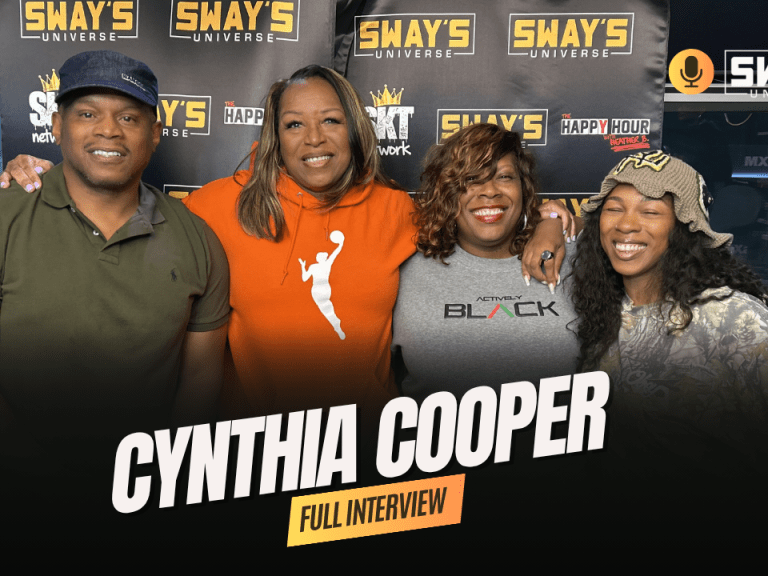
Greatness doesn’t announce itself. It shows up in the early mornings, the hard practices, and the moments when everyone else has found an excuse to stop. Cynthia Cooper never stopped.
A four-time WNBA champion, two-time league MVP, and Naismith Memorial Basketball Hall of Fame inductee, Cooper didn’t just leave her mark on basketball—she redefined what it meant to dominate the game. Now, she’s bringing that same energy to the broadcast booth as a game and studio analyst for Prime Video’s WNBA coverage.
In a recent conversation, Cooper opened up about the current state of the league, the physical nature of the game, and the mental framework that carried her from Watts, California to the top of the world.
A Resume That Defies Logic
Before getting into the modern era, it’s worth pausing on what Cooper actually built during her playing days. Her accolades aren’t just impressive—they’re historically significant:
- Four-time WNBA Champion (1997, 2000)
- Four-time WNBA Finals MVP
- Two-time WNBA regular season MVP
- Led the WNBA in scoring for three consecutive seasons
- Olympic Gold and Bronze medalist
- Naismith Memorial Basketball Hall of Fame inductee
Beyond the WNBA, Cooper’s dominance stretched across Europe. She played professionally in Spain and Italy for a decade, leading the Italian league in scoring eight separate times. That kind of consistency—sustained, global, and relentless—is the difference between a great player and a legend.
The WNBA Is Now a Global Game
Cooper’s new role with Prime Video isn’t just a career pivot. It signals something much bigger about where the WNBA is headed. The broadcast now reaches over 200 countries—a scale of exposure that was unimaginable when the league launched in 1997.
“We’re all over the world. We’re not just local; we’re not just in America,” Cooper explained. She shared a story of a former teammate living in Spain who reached out to praise the Prime coverage. That kind of global connection is what Cooper sees as the realization of a long-promised dream. The WNBA Commissioner’s Cup Championship, featuring powerhouses like the New York Liberty and the Las Vegas Aces, is just one example of how the league is delivering on that promise.
The “Watts” Perspective on Physicality
The WNBA’s physical play—particularly around stars like Caitlin Clark—has sparked fierce debate. After Indiana Fever head coach Stephanie White publicly criticized what she called “reckless” plays and missed calls against Clark, the basketball world divided sharply on how much protection elite players deserve.
Cooper’s response was grounded in her roots. Growing up in Watts, California, she learned early that getting hit wasn’t the end of the story—it was the beginning of your response.
“I’m from Watts… that means I’ve been hit before and had to get up,” she said.
Her philosophy isn’t about dismissing the conversation around player safety. It’s about mindset. When opponents are being extra physical, Cooper believes that’s your signal to raise your level—not to look for sympathy. Use the frustration. Turn it into fuel. As she puts it, you don’t bring a “B-game” to a battle; you arrive with your best.
From Assignment to Dynasty: How the League Has Evolved
Reflecting on the inaugural 1997 season, Cooper points to just how far the WNBA has come. In those early days, players were assigned to teams rather than selected through the high-profile draft process fans know today. Cooper landed in Houston largely because Sheryl Swoopes was pregnant—and she seized that opening completely.
Today, the talent pipeline is deeper than ever. The new collective bargaining agreement has finally brought player salaries closer to what these athletes deserve, attracting more dedicated athletes to the professional game from a younger age.
Cooper specifically highlighted Angel Reese as a standout example of professionalism and growth. Despite public criticism, Reese has continuously expanded her game—improving her finishing, ball-handling, and three-point shooting. That kind of deliberate evolution is exactly what Cooper believes will push the league forward.
Success Is a Solution-Based Practice
Perhaps the most powerful thread running through Cooper’s story is her approach to adversity. Growing up as one of eight children with a single mother working around the clock, complaining simply wasn’t an option.
“If you want to set yourself apart, you have to do something special,” Cooper said.
Her rules for achieving greatness are straightforward: stop focusing on the obstacle, channel your energy into the solution, and grind through the hardest moments without reaching for excuses. That mindset built a dynasty in Houston. It carried her across two continents. And it’s the same mindset she brings to the broadcast booth every single game.
The Legend Doesn’t Stop Here
The WNBA is in a golden era—globally broadcast, financially evolving, and stacked with talent at every position. Cynthia Cooper’s transition from dominant player to sharp analyst ensures that the wisdom of a champion stays in the conversation.
The foundation of this league was built on grit and a refusal to quit. As Cooper says, “When you put your energy in the right place, success happens.”
Watch the full conversation here: