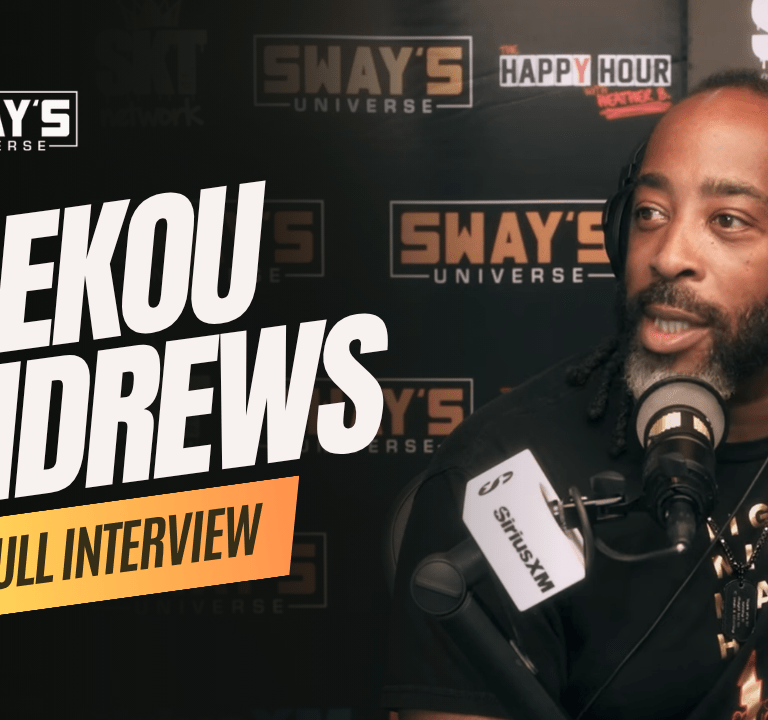

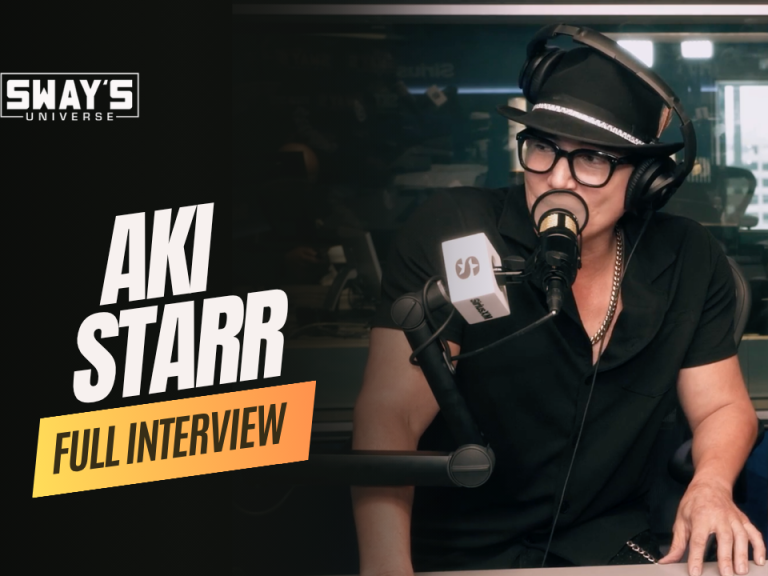
In a recent trip down memory lane, the legendary Sway Calloway sat down with long-time friend and freestyle icon Aki Starr (of the group Spanish Fly) and Brando from the iconic Thump Records. This wasn’t just an interview; it was a masterclass in music history, the grind of the 1980s San Francisco scene, and the enduring legacy of Chicano culture. From Sway’s secret past as an R&B singer to the engineering origins of lowriders, the conversation revealed the layers of a culture that continues to sell out arenas decades after its inception.
The Secret History of Sway Calloway: From MC to R&B Crooner
Before he was the king of morning radio and a global hip-hop authority, Sway Calloway was deep in the trenches of the Bay Area music scene. The transcript reveals a side of Sway many fans might not know: his roots in groups like Fly Dynamic Force and All City Productions. But the real “secret” that came to light was Sway’s stint as an R&B singer and songwriter.
Aki Starr reminded the audience that Sway didn’t just rap; he provided vocals for tracks like “Love Games” and wrote the catchy hook for “I Got It Girl.” Sway even broke into a brief rendition of his lyrics: “Dreams come true if you wait… all it takes is a little time, girl.” This early versatility highlights the creative melting pot of the late eighties, where hip-hop, R&B, and freestyle were all bleeding into one another.
The 5 AM Grind: Seafood, Rats, and UPS
The path to stardom was paved with heavy lifting and early mornings. Sway and Aki shared stories of their “outside jobs” that kept the lights on while they chased musical success. Long before the Billboard charts, they were driving delivery trucks through San Francisco’s Chinatown at 5 AM.
Aki shared a hilarious, albeit slightly cringey, anecdote about their time delivering seafood. While walking through a restaurant kitchen, they witnessed a massive rat scurrying behind an elderly patron, a moment that nearly gave them a heart attack but served as a testament to the “dirty” reality of their hustle. They eventually transitioned to working for UPS, where Sway recalled “building walls” of packages during the infamous 1989 earthquake. These stories serve as a powerful reminder that behind every “overnight success” are years of manual labor and shared struggles.
The Rise and Resurgence of Spanish Fly
Aki Starr’s career took off with the group Spanish Fly, specifically with the 1994 hit “Treasure of My Heart.” The group’s success was fueled by a unique blend of freestyle energy and soulful harmonies. Aki explained how a simple a cappella track, inspired by the style of All-4-One, caught the attention of Warner Brothers and eventually led to four Billboard-charting songs.
Today, Aki Starr is busier than ever. Sway noted that Aki’s performance schedule is currently packed, even rivaling major contemporary artists. This leads to a pivotal question: Why is freestyle music seeing such a massive resurgence?
The Nostalgia Factor and the Next Generation
According to Aki, the resurgence is driven by two factors:
- The “Old School” Crowd: The original fans who grew up in the 80s and 90s now have the disposable income and the desire to revisit their youth, consistently selling out arenas.
- The Legacy Listeners: Children who grew up hearing freestyle and oldies in their parents’ cars are now adults. When they hear the familiar “Doo-Wop” or freestyle sound in new music, it triggers a sense of nostalgia that feels both classic and fresh to them.
The Hybrid Artist: Freestyle meets Doo-Wop
Aki Starr has evolved into what he calls a “hybrid artist.” While many performers stick to one lane, Aki bridges the gap between high-energy freestyle and the smooth, harmonic sounds of Doo-Wop Oldies. He clarified the distinction for the audience: while “Soul Oldies” often feature the full-band sound of Motown (think The Four Tops), “Doo-Wop” is more stripped down, focusing heavily on vocal harmonies and rhythmic “claps.”
Thump Records and the “East Side Story” Legacy
The conversation took a deep dive into the business side of the culture with Brando from Thump Records. Celebrating its 36th anniversary, Thump Records is a cornerstone of Chicano music history. Founded by Bill Walker, the label started in the most grassroots way possible: at a swap meet.
Brando explained how Thump grew by paying attention to what customers were actually buying. This led to the creation of the legendary Old School and Lowrider Oldies compilations. Perhaps most importantly, Thump Records took the “East Side Story” series, which began as a bootleg compilation nearly 50 years ago, and legitimized it by licensing the tracks and giving the music a professional platform.
The Engineering of Chicano Culture: Lowriders and Zoot Suits
One of the most fascinating segments of the discussion centered on the origins of Chicano culture and the lowrider scene. Brando and Sway discussed how the culture is deeply rooted in American history, specifically post-World War II.
Mexican-American veterans returned home from the war with advanced engineering and hydraulic skills they had learned in the military. They applied these skills to their vehicles, creating the iconic “low and slow” aesthetic. This wasn’t just about style; it was about taking specialized knowledge and repurposing it to create a unique cultural identity.
This identity extended to fashion, specifically the Zoot Suit. With its long chains, pinstripes, and wide-brimmed hats, the Zoot Suit remains a symbol of Chicano pride. Aki Starr continues to carry this torch, often performing in vibrant pinstriped suits that honor the “Pachuco” style of the past.
The Beat Goes On
The interview wrapped up with a look toward the future, specifically the massive shows happening at the LA County Fair in Pomona. It’s clear that whether it’s through head-spinning breakdance moves, soulful Doo-Wop harmonies, or the gleaming chrome of a lowrider, this culture is far from fading. It is a vibrant, evolving legacy that continues to bridge generations and celebrate the resilience of the Chicano spirit.
As Aki Starr prepares to take the stage in his black pinstripe suit, and as Thump Records continues to distribute the soundtrack of the streets, one thing is certain: the freestyle and oldies scene is not just a memory, it’s a movement.
Watch the full video: